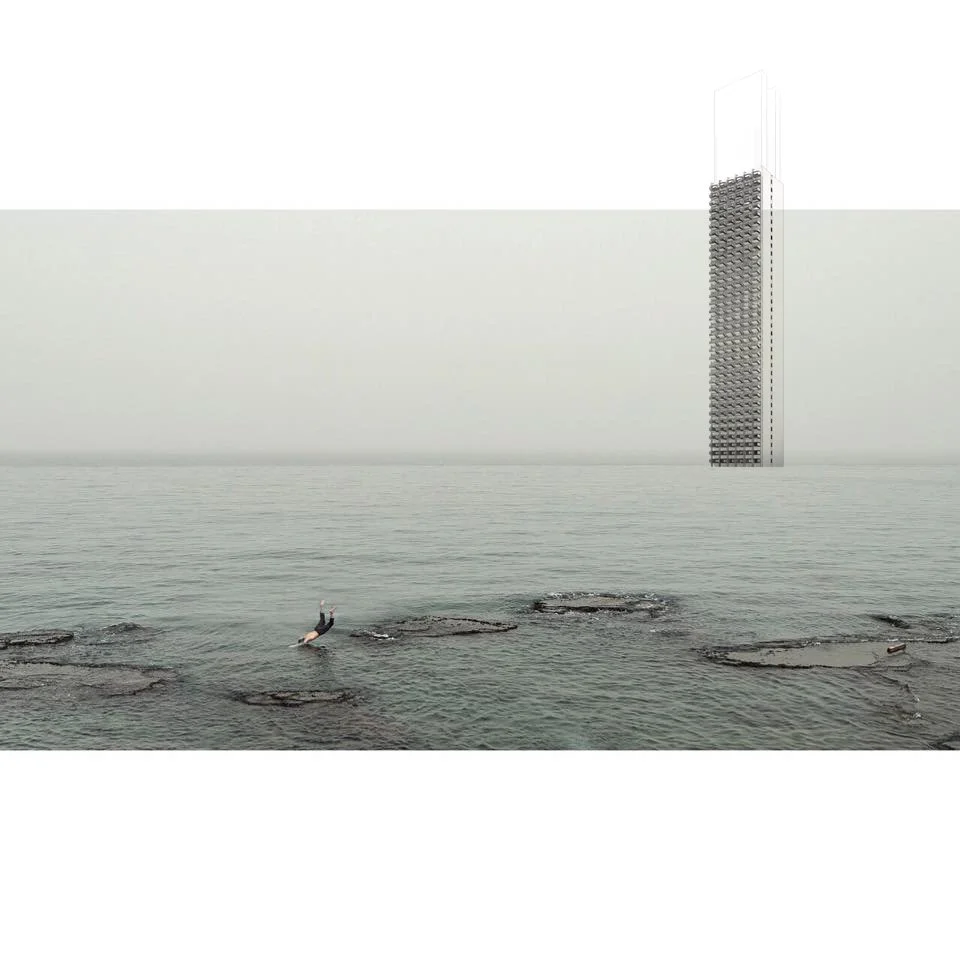
BURJ EL MURR | Beirut, Lebanon
Architectural Rehabilitation Design
Type: Urban
Status: Concept
Dealing with history and preservation resurfaces the issue of memory and commemoration. Reconstruction in Beirut is very delicate, it offers the chance to remember, select, debate; thus writing the history, building the memory.
James Young focuses on the importance of monuments in illustrating the evolution of a collective memory. Monuments play a vital role in giving a shape what used to be there, what was once felt. They offer a spatial platform for exchanging historical ideas.
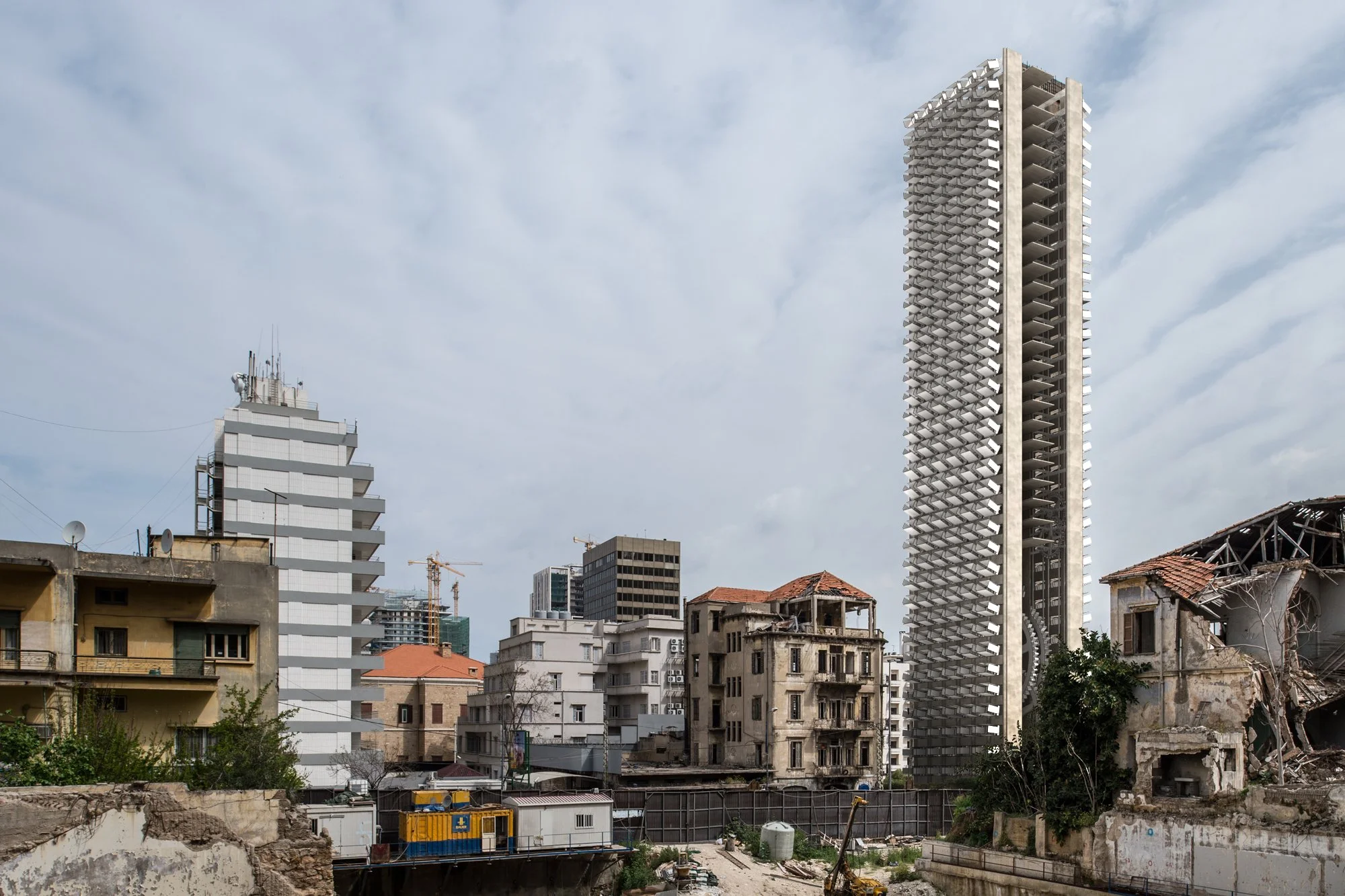
Bourj El Murr, a war icon, is a massive 30 storey building used by snipers throughout the Lebanese civil war. Imposing itself on Beirut’s skyline, it takes part in shaping the city, but is idle when it comes to structuring, organizing and programming it.
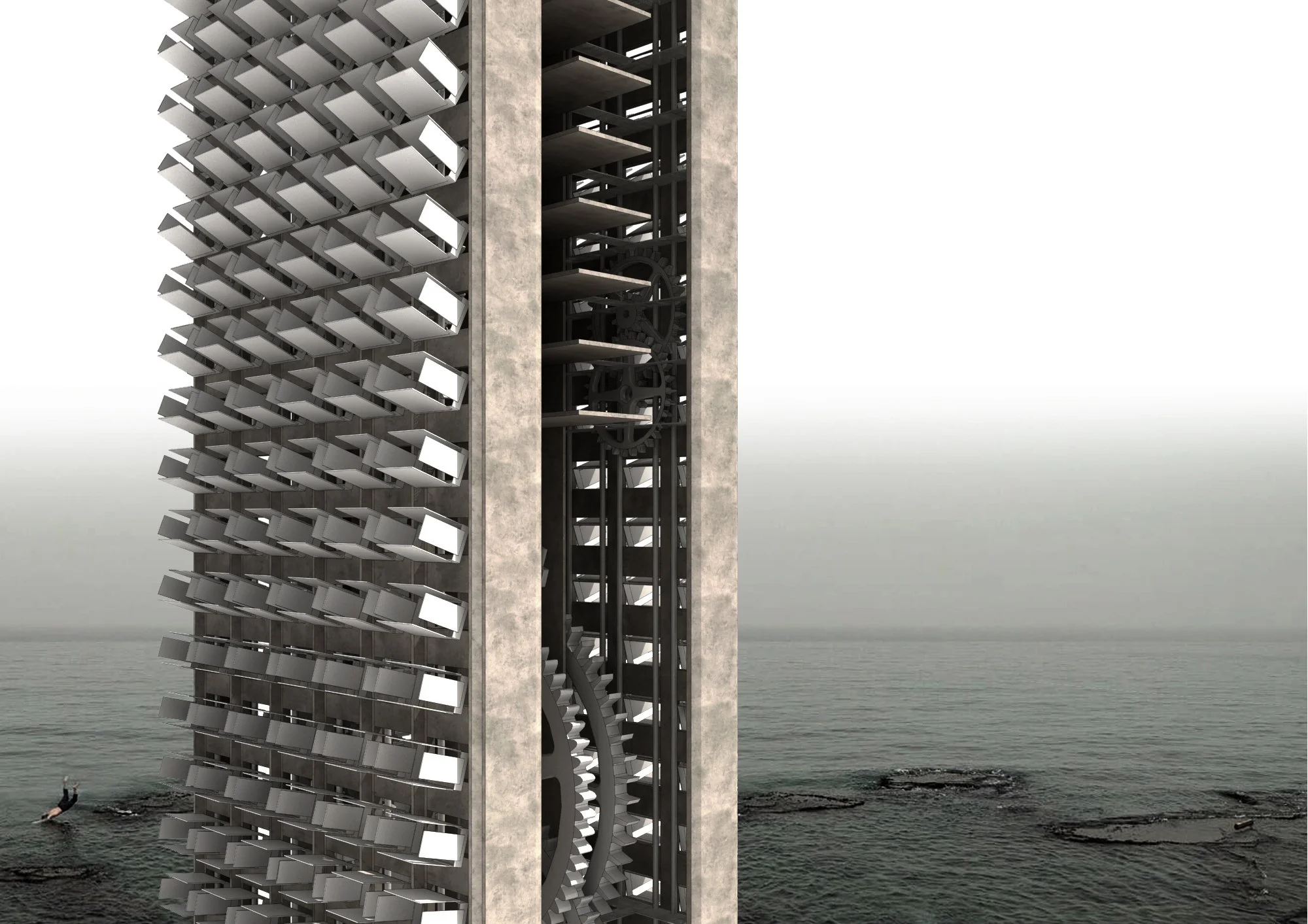
The project intends to represent the structure through Beirut’s daily activity while giving it a signage role addressed to Beirut’s social layer. The façade will have projected light reflectors coming out of the windows emitting light beams heading both East and West.
History pertains to the living man in three aspects: it pertains to him as a being who acts and strives, as a being who preserves and reveres, a being who suffers and seeks deliverance.
-Friedrich Nietzsche, Untimely Meditations
Preservation is usually considered as an endeavor to carefully protect history, the object of preservation being viewed as a treasure that cannot be touched. If a building is damaged, many architects try to conserve the authenticity of the historical by rebuilding what used to be there.
Beirut consists of layers of different civilizations before the civil war (1975-1990). Ruins and destruction covered the city for a while, until a joint stock company recently decided to rebuild the city back to its state 20 years before the war. The city becomes a big urban planning project, where every building resembles the one next to it. What was once authentic is now a mere copy of the original.